Rescue Breathing Refresher: post Sand Collapse
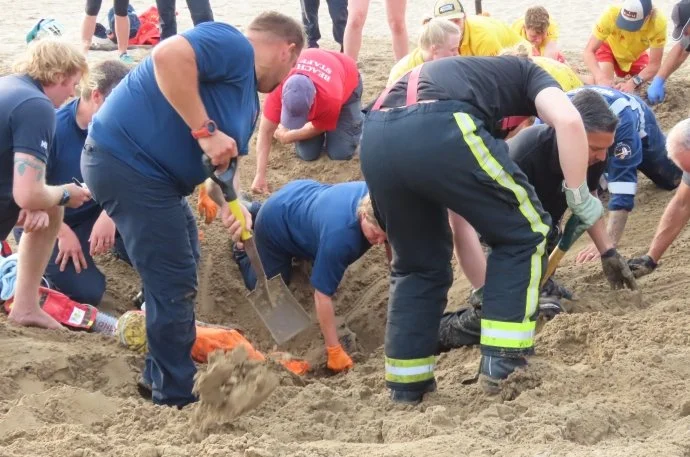
When someone is pulled from a sand collapse, respiratory arrest (no breathing) can happen fast due to suffocation, even while the heart is still pumping. If the victim has a pulse but is NOT breathing, follow the official American Heart Association (AHA) rescue breathing protocol:
ONCE EXTRICATED
Call 911 immediately or Activate the Beach Patrol’s EMS System (send someone to call and fetch an AED/first aid kit).
Clear the mouth/airway: Quickly inspect the mouth for sand, dirt, or debris. Only remove visible blockages—do not perform blind finger sweeps.
Open the airway: Use the Head-Tilt/Chin-Lift maneuver. (If you suspect a head or neck injury from the collapse, use the Jaw-Thrust maneuver without tilting the head).
Deliver Breaths
For Adults = 1 Breath every 6 Seconds
For Children (Age 1 to Puberty) = 1 Breath Every 2 to 3 Seconds
Delivering Breaths: Give each breath over 1 second and watch for the chest to visually rise.
Avoid blowing too hard or too fast (hyperventilation).Re-Check Pulse Every 2 Minutes: Stop to check the carotid pulse every 2 minutes.
If the Pulse Drops/Disappears: If you lose the pulse at any point (or if a child's heart rate drops below 60 bpm with signs of poor perfusion), immediately switch from rescue breathing to full CPR (30 compressions to 2 breaths for adults; 15:2 for 2-rescuer child CPR).
In a sand collapse emergency, seconds count. Delivering prompt rescue breaths maintains critical oxygenation to the brain while the heart is still pumping, but constant vigilance is essential—rechecking the victim’s pulse every two minutes ensures you can pivot instantly to full CPR if their condition deteriorates before emergency services arrive.