Using the ‘SAMPLE’ Acronym for Land-Based Emergencies
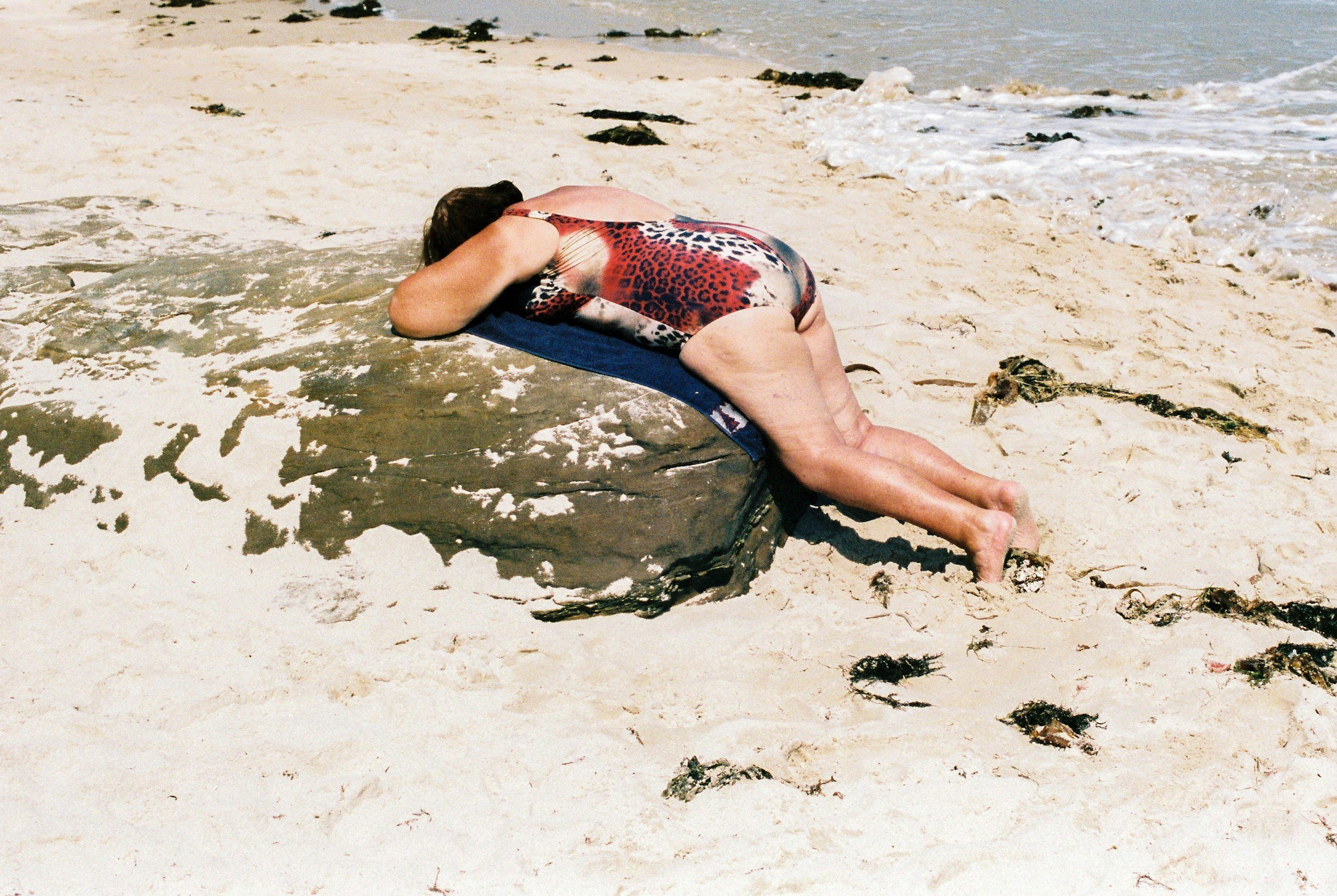
As ocean lifeguards, our primary expertise is in the water. We are masters of surf rescue, drowning prevention, and aquatic surveillance. However, the nature of our job often requires us to be the first responders on land—whether it’s a heat-related illness on the beach, a medical emergency on the boardwalk, or a bystander collapse in the parking lot.
When you are the first on the scene, you don't need to be an EMT or a paramedic to be highly effective. Your role is to provide immediate care, activate the Emergency Medical System (and protocols for your organization) and, just as importantly, to gather crucial information for the advanced responders who are on their way.
To do this systematically and efficiently, we adopt a tool widely used by pre-hospital medical professionals: the SAMPLE acronym.
What is SAMPLE?
SAMPLE is a simple, standardized method for conducting a rapid assessment of a patient. Each question aligns with the letters in the word S-A-M-P-L-E. It helps you organize your questioning so you don't miss vital details while under pressure.
By asking these six questions of the patient (if they are conscious) or their friends and family, you provide the incoming advanced life support or paramedics with a "clean handover" that helps them provide better care, faster.
The SIX Key Questions
S: Signs and Symptoms
What to ask: "What is the person feeling?" or "What do you see?"
The goal: Distinguish between what the patient reports (symptoms, like dizziness or nausea) and what you can observe (signs, like pale skin, sweating, or swelling).
A: Allergies
What to ask: "Are you/they allergic to any medications, foods, or environmental factors?"
The goal: If they are unconscious, check for a medical alert bracelet. Identifying a life-threatening allergy—like a severe nut allergy or a reaction to penicillin—is critical for the arriving medical team.
M: MEDICATIONS
What to ask: "What medications are you/they currently taking?"
The goal: Knowing if someone is on blood thinners, insulin, or heart medication can change the treatment path for incoming paramedics.
P: Past Medical History
What to ask: "Do you/they have any pre-existing medical conditions?"
The goal: Focus on relevant history, such as a history of seizures, heart conditions, diabetes, or asthma.
L: Last Oral Intake
What to ask: "When was the last time you/they ate or drank anything?"
The goal: This is crucial if the patient requires sedation or surgery later, and it can also help identify if the issue is related to dehydration or low blood sugar.
E: Events Prior
What to ask: "What were you/they doing right before this happened?"
The goal: Look for the context. Did they trip? Did they complain of a headache? Was there a specific exertion right before the collapse? Understanding the chain of events provides the context that clinical vitals cannot.
Why This Matters for the Ocean Guard
You aren't being asked to diagnose the patient. You are being asked to collect data.
When paramedics arrive, they will be stepping into an environment they are unfamiliar with. By having the "SAMPLE" information ready, you transition from simply "holding the scene" to being a vital partner in the patient’s clinical outcome.
Best Practices for Your Response:
Stay Calm: Use a steady voice. If the patient is overwhelmed, your calmness is the most stabilizing force on the beach.
Use a Witness: If the patient is incapacitated, identify a friend or family member early. Ask them, "I need to help your friend/family member. Can you tell me exactly what happened just before they went down?"
Keep it Brief: The SAMPLE assessment should take seconds, not minutes. If the patient is critical, prioritize life-saving interventions (ABCs) first, and gather the SAMPLE information while you are monitoring them or waiting for support.
The Handoff: When the rescue squad arrives, lead with your summary: "This is [Name/Age], I’ve performed a SAMPLE assessment and here is what I have..."
By standardizing how we communicate, we elevate the level of care on our beaches. Keep it simple, keep it systematic, and always prioritize the information that helps the professionals help the patient.
Here’s some resources for YOU and your team to help implement SAMPLE into your land emergency routines.
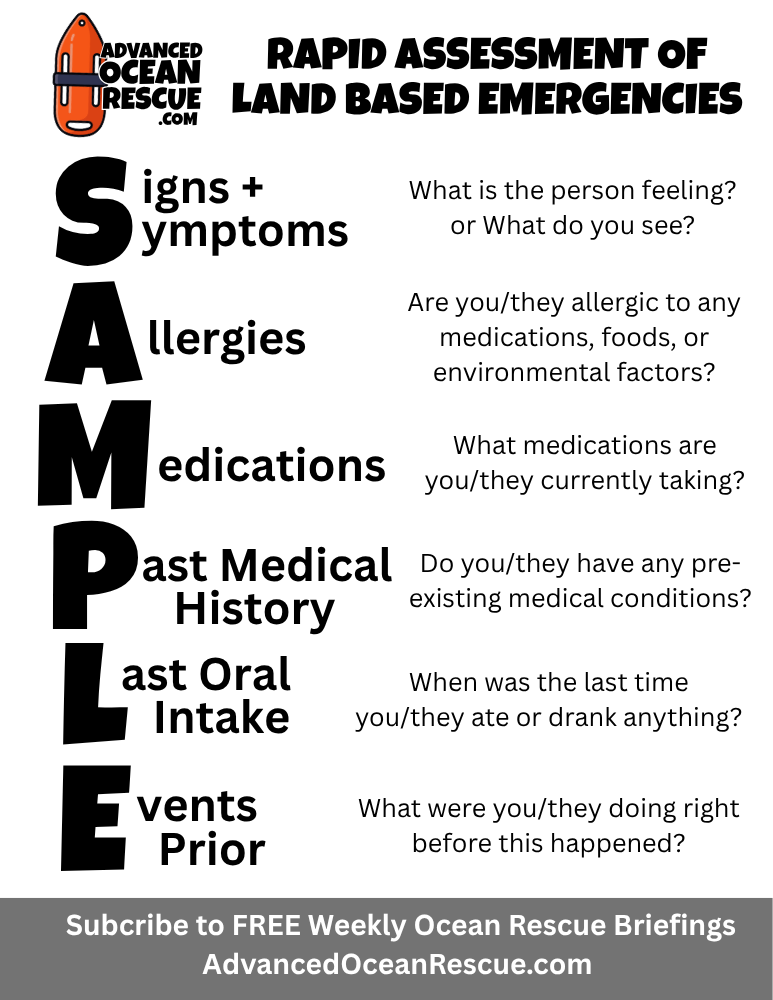
PRINT POSTER (8.5” x 11”)
Print and display this poster as part of your on-going training on victim assessments.
Click the image on the left to download a PDF version.
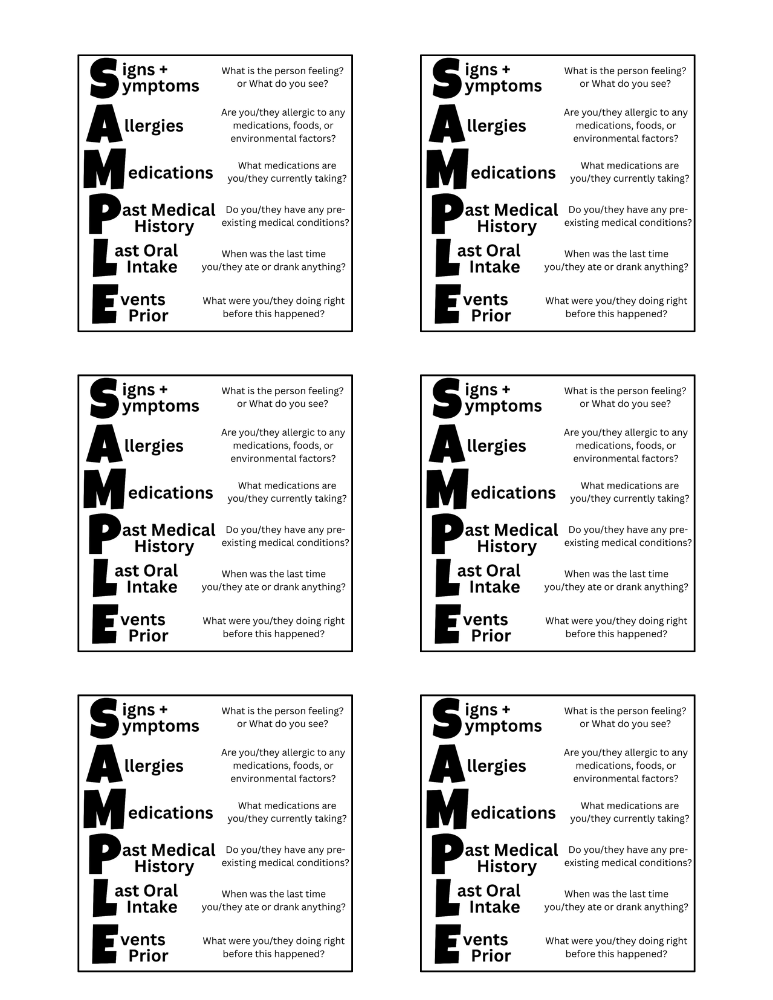
PERSONAL ‘SAMPLE’ CUE CARDS
Print and cut into small cards. Place this inside your first aid kit or pocket mask so it’s always available as a prompter. Pull it out when needed.
Click the image on the right to download a printable PDF.
Share the extras with your colleagues !!! :-)