The "TACO" Method: Tactical Rapid Cooling for Ocean Rescuers
Sometimes when you are on the beach you must improvise to save a life. The TACO (Tarp and Cool) method is a specialized, field-expedient technique designed to facilitate rapid evaporation and convective cooling for suspected heat stroke victims.
When to Deploy
Use TACO immediately when a victim exhibits signs of heat stroke (altered mental status, dry/hot skin, erratic behavior) and you do not have immediate access to specialized medical cooling equipment.
Remember: With heat stroke, time is tissue. Your goal is to drop their core temperature as fast as possible before EMS transport.
The Tactical Execution
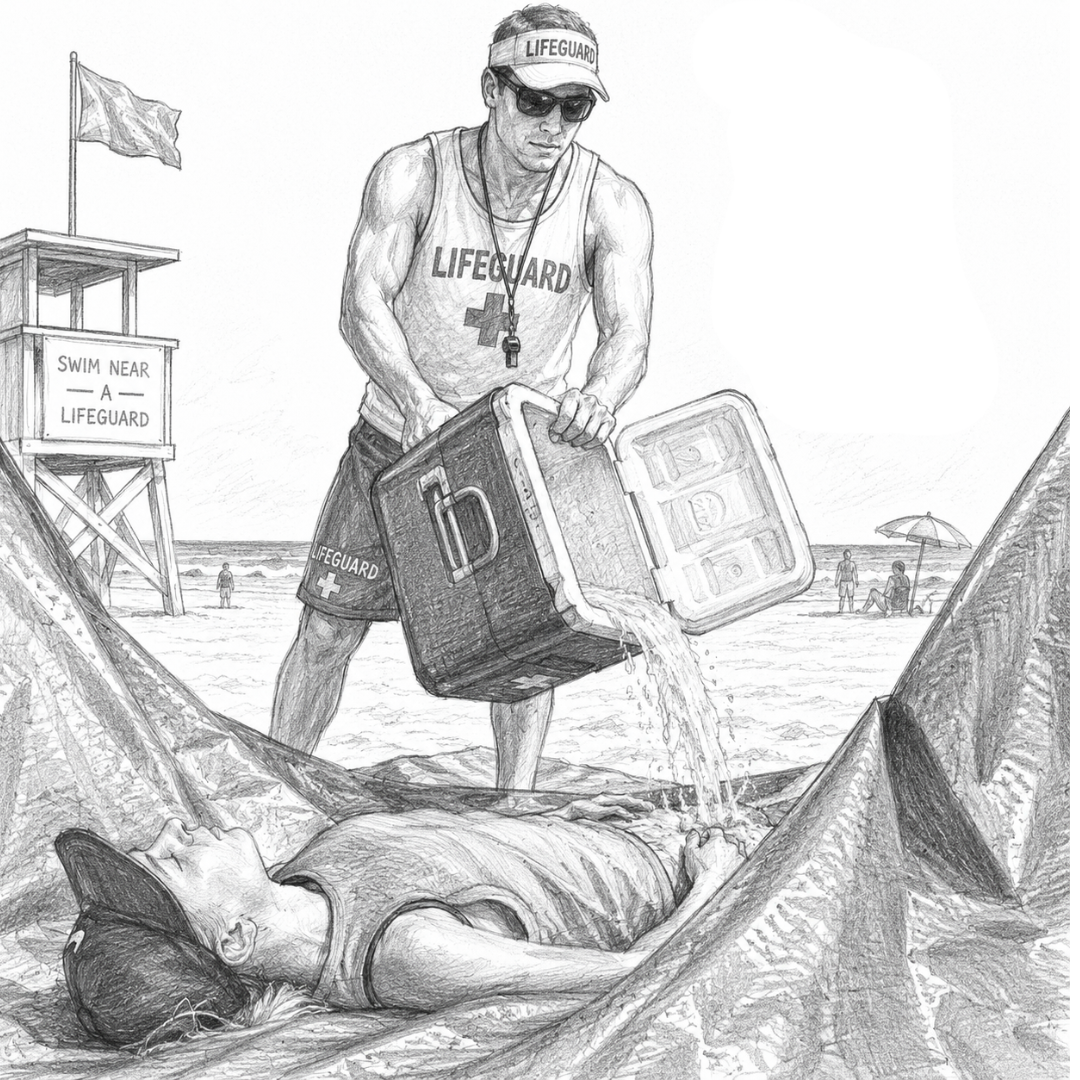
TACO - Tarp and Cool
If you don’t have a designated cooling tub, look for these common lifeguard resources to build your "cooling taco":
1. The Tarp (or Large Plastic/Vinyl Barrier)
Source: Utilize a beach bag liner, a heavy-duty trash bag, a waterproof tarp from your storage locker, or even a large, non-porous beach umbrella cover. Use anything that will hold the water in.
Setup: Lay the material on the sand in the shade (under an umbrella or tower shadow). If the ground is hot, place a thin layer of towels underneath to act as an insulator.
2. The "Cool" (Creating the Trough)
The Fluid: Use ambient temperature water. While ice is ideal, any water is better than no water.
The Immersion: Roll the edges of the tarp up to create a shallow "tub" or basin around the victim. You only need enough water to coat the torso, axilla (armpits), and groin—the primary areas for heat exchange.
3. Enhancing the Effect
Soaked Towels: If water is limited, soak towels in the ocean or cooler and place them over the victim’s major pulse points (neck, armpits, and groin).
Active Fanning: Evaporation is key. Once the victim is wet, use a boogie board, a large magazine, or an umbrella to fan them vigorously. This convective movement of air pulls heat away from the skin significantly faster than passive cooling.
Shallow Water "Tactical" Option: If you are physically unable to carry the patient to a tarp, move them to the very edge of the surf line where the tide is just barely lapping over their body. Use the shallow, moving water to constantly cycle heat away from their skin while monitoring their airway with extreme vigilance to prevent aspiration.
LIFEGUARD Pro-Tip: The "Swap"
If the patient is conscious but disoriented, they may try to pull off the wet towels or get out of the tarp. Enlist a secondary responder to act as a "calm and cool" coach—talking to the patient, keeping them reclined, and ensuring they do not overexert themselves while you manage the cooling process.
Safety Warning: Always prioritize airway management. If the patient is semi-conscious or vomiting, ensure they are placed in a recovery position (on their side) even while in the "taco" to prevent aspiration.